Leading with Data
Department of Defense
CHALLENGE
The Department of Defense (DOD) needed more visibility into the health and maintenance of the F35 Joint Strike Fighter program. The Joint Program had been relying on manual processes to produce daily paper-based reports, aggregated from disparate sources in spreadsheets, slides and/or PDF documents generated from over 140 tools and sources. The manual reports led to delays and waste within the organization associated with critical decision making for the advance weapon system program.
SOLUTION
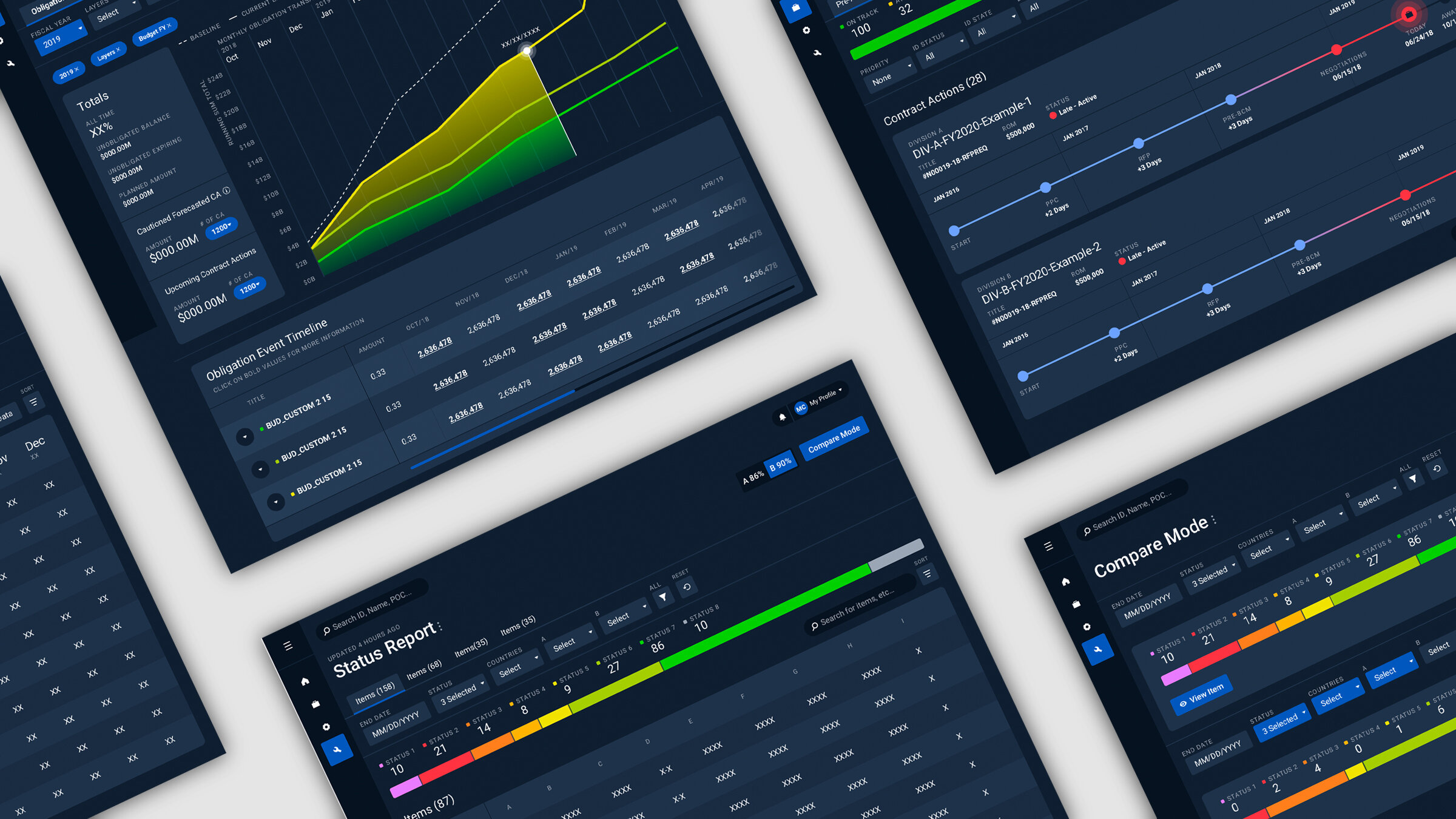
Through cross collaboration with data, development, product and design teams, we created an application that served as a single source of truth for the organization. The Digital War Room (DWR) application improved management and decision-making capabilities in Business (finance and procurement), Production, Sustainment, Development, Engineering and Programmatics. The DWR provided leadership and key decision makers with an enterprise view, driven by multiple distinct user views, data visualizations, key performance metrics, and the ability to both understand root-causes of issues and to evaluate and determine appropriate action plans to enhance the efficiency and effectiveness of the program.
CONTRIBUTIONS
Team leadership
Stakeholder management
Conducted user interviews and workshops
Developed wireframes
Designed data visualizations
Created interactive prototypes
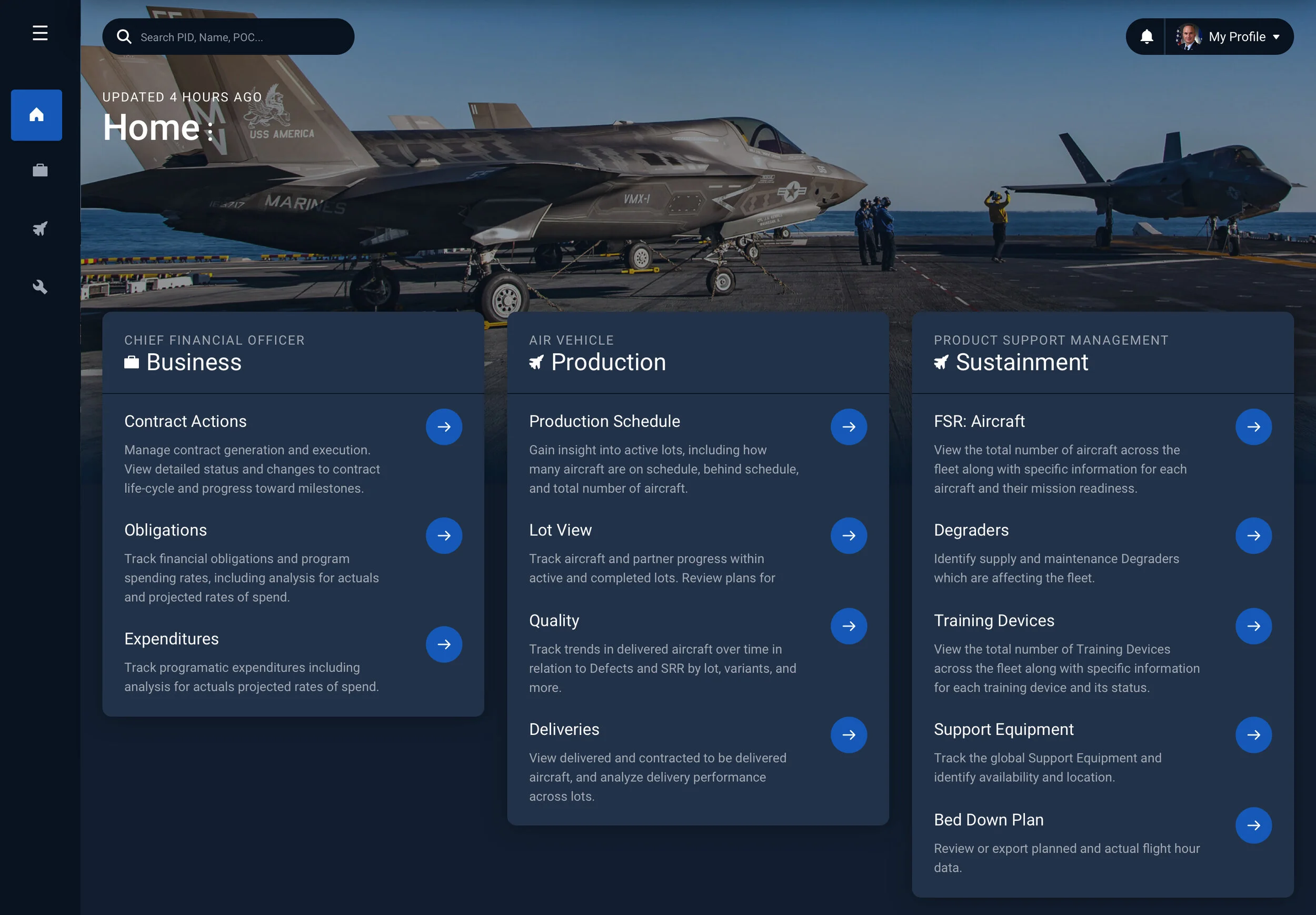
Through co-creation sessions, user interviews, research, and usability testing, we were able to test our solution with users and make further iterations, ultimately delivering a cohesive application that provided better visibility into the $1 trillion program. As we explored various solutions and gained access to more users, we uncovered additional needs and work streams, which led to the development of new panels.
Throughout the process users were key contributors and became advocates for change. The success of our new solution spread across the DoD, resulting in requests to transform additional supply chain processes in the Army and Air Force.
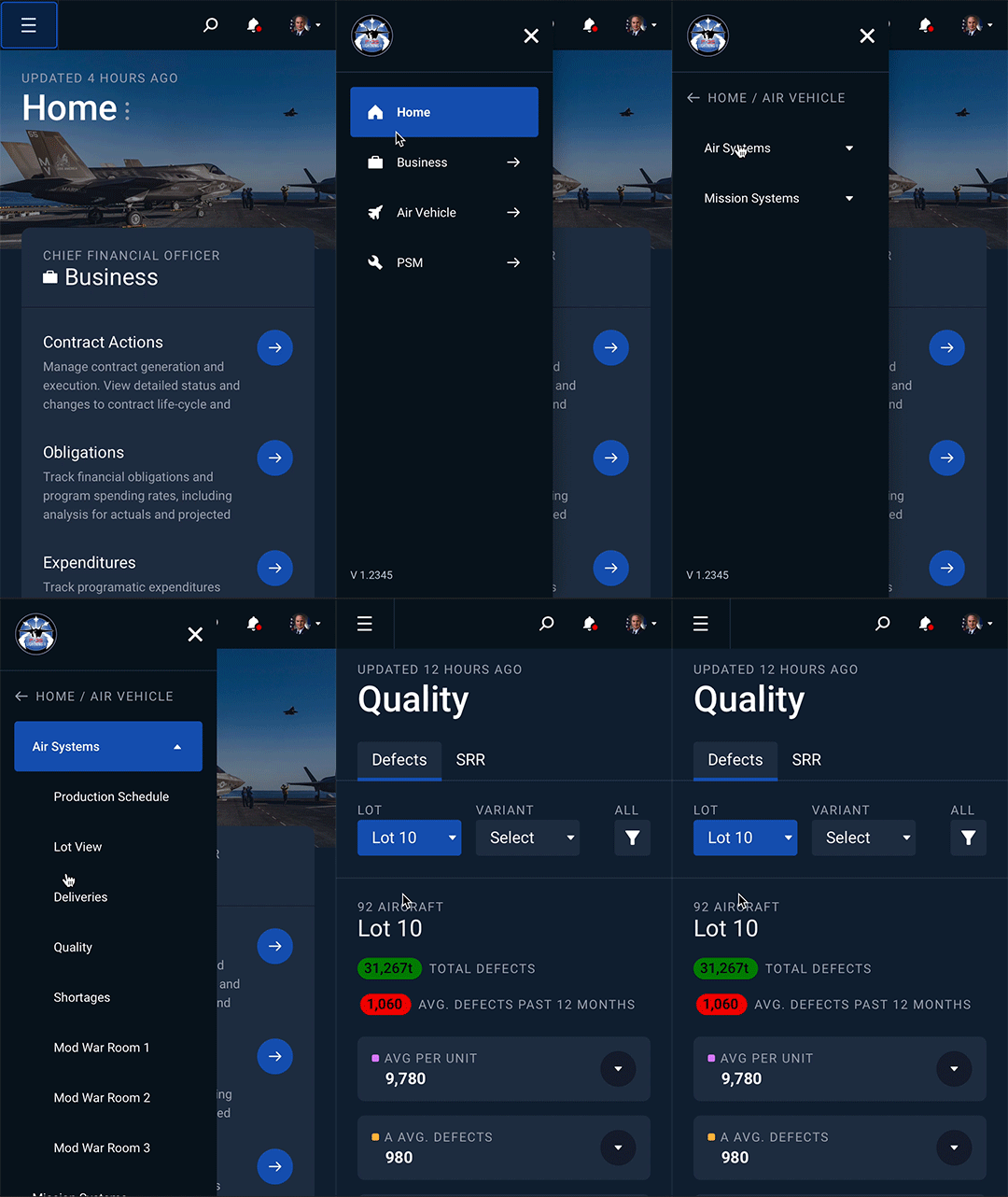
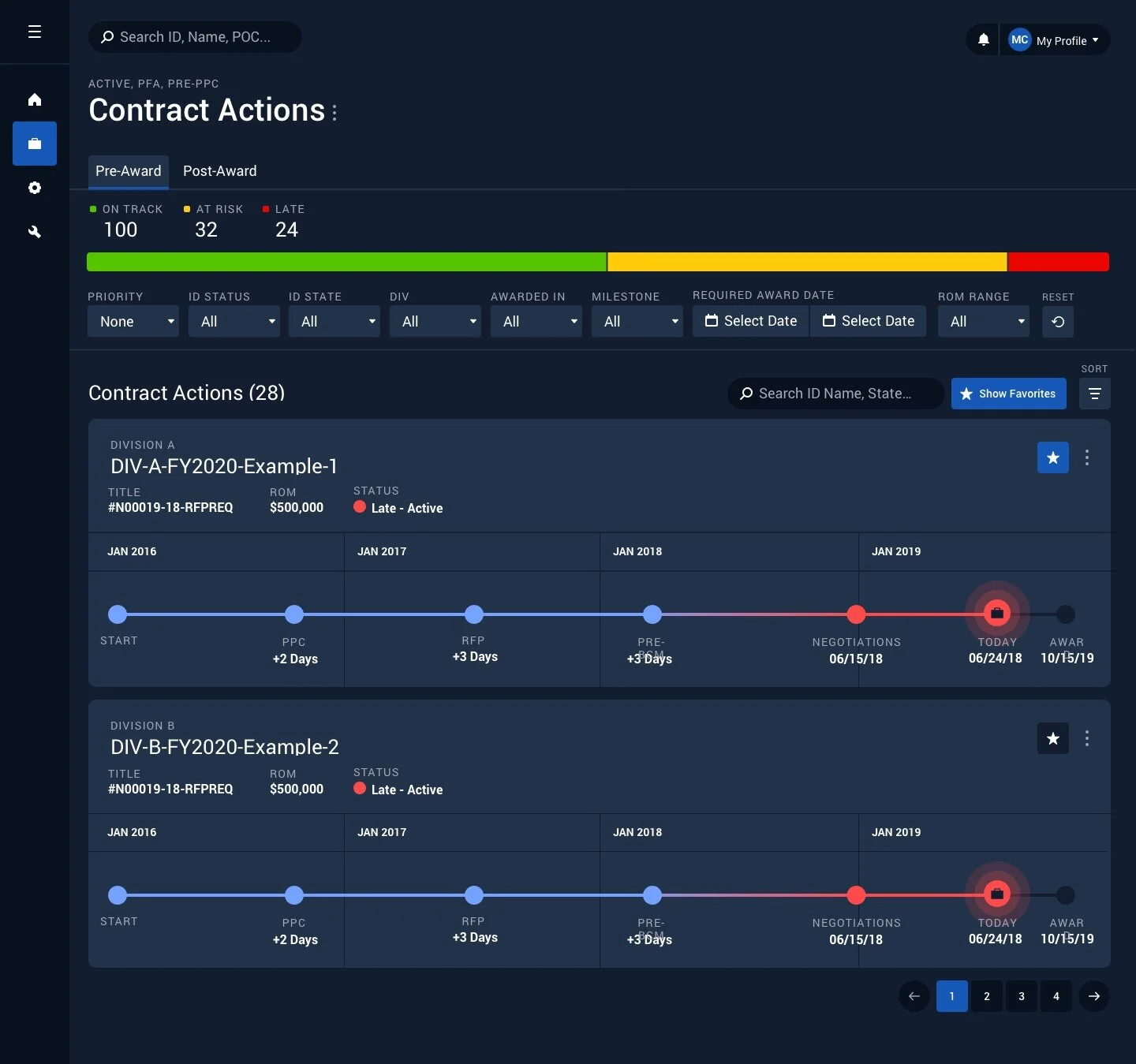
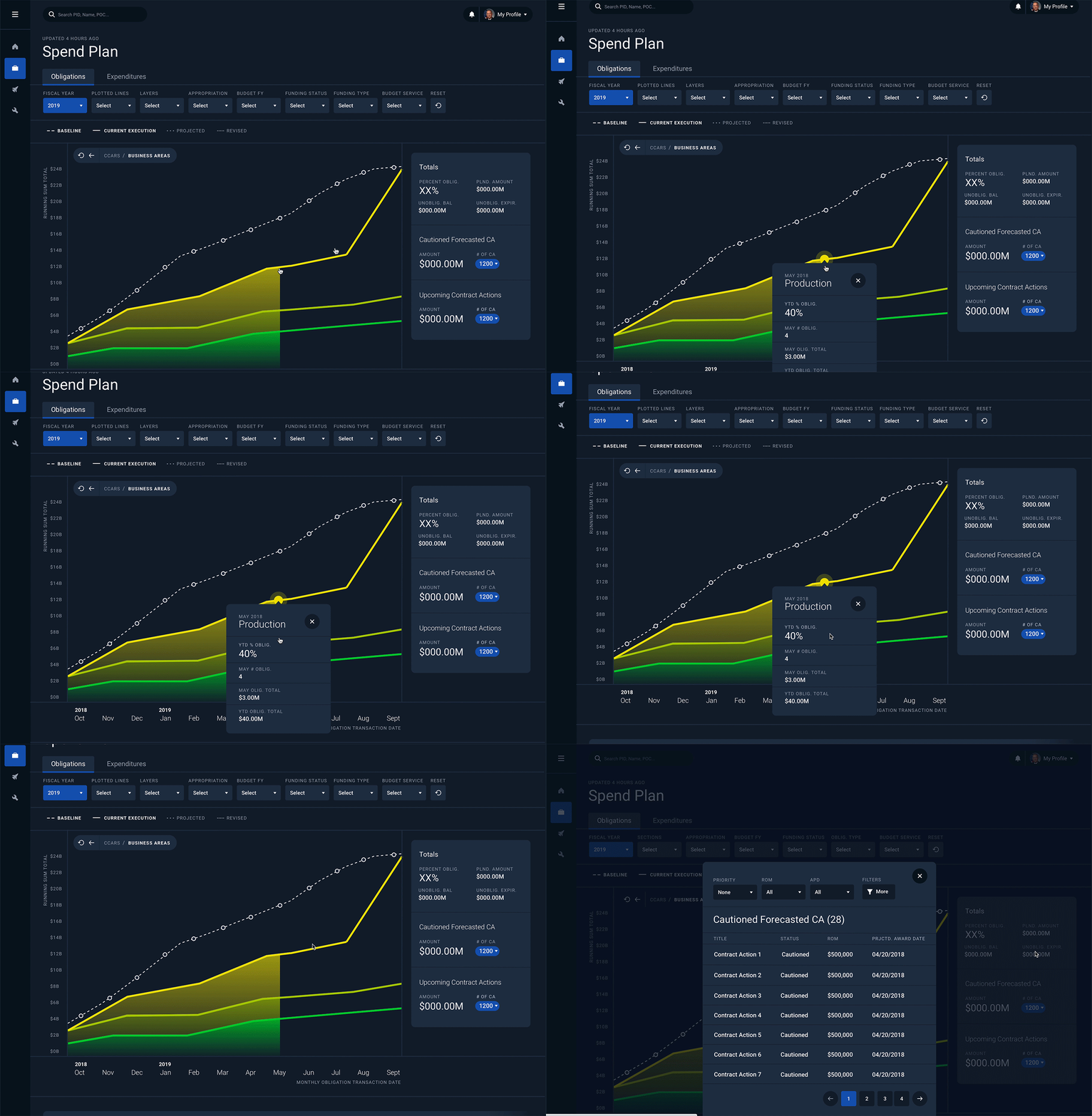
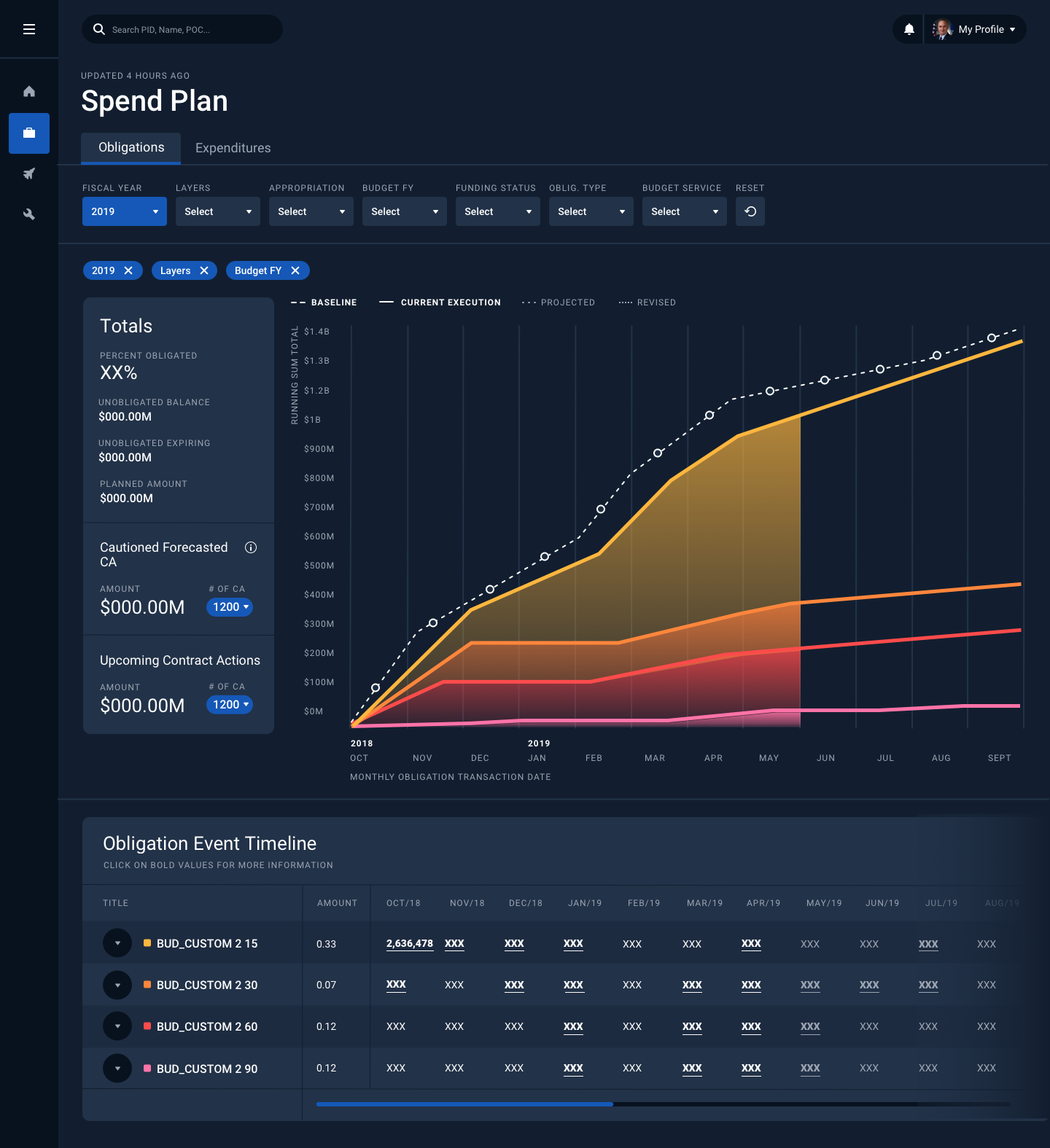
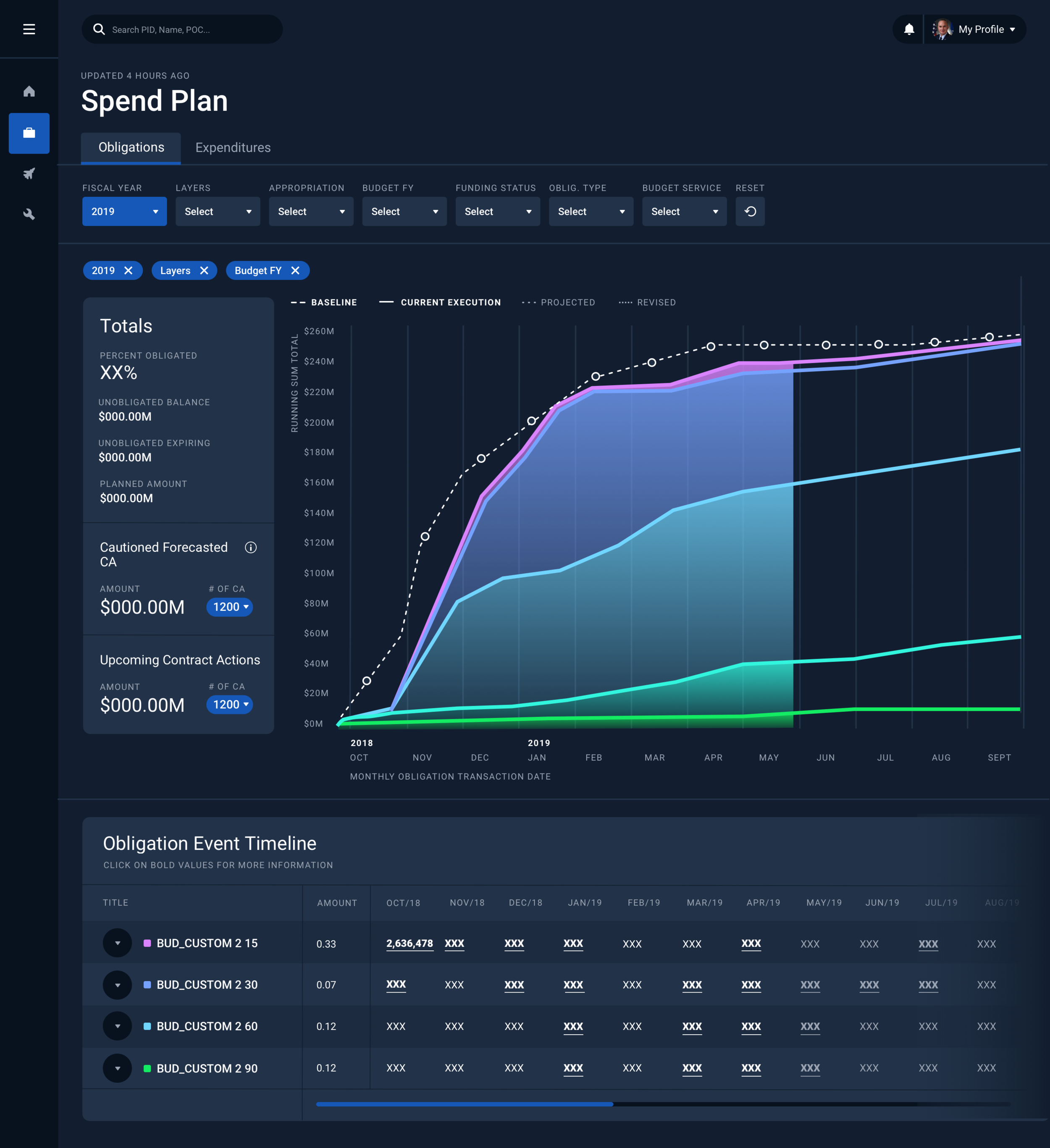
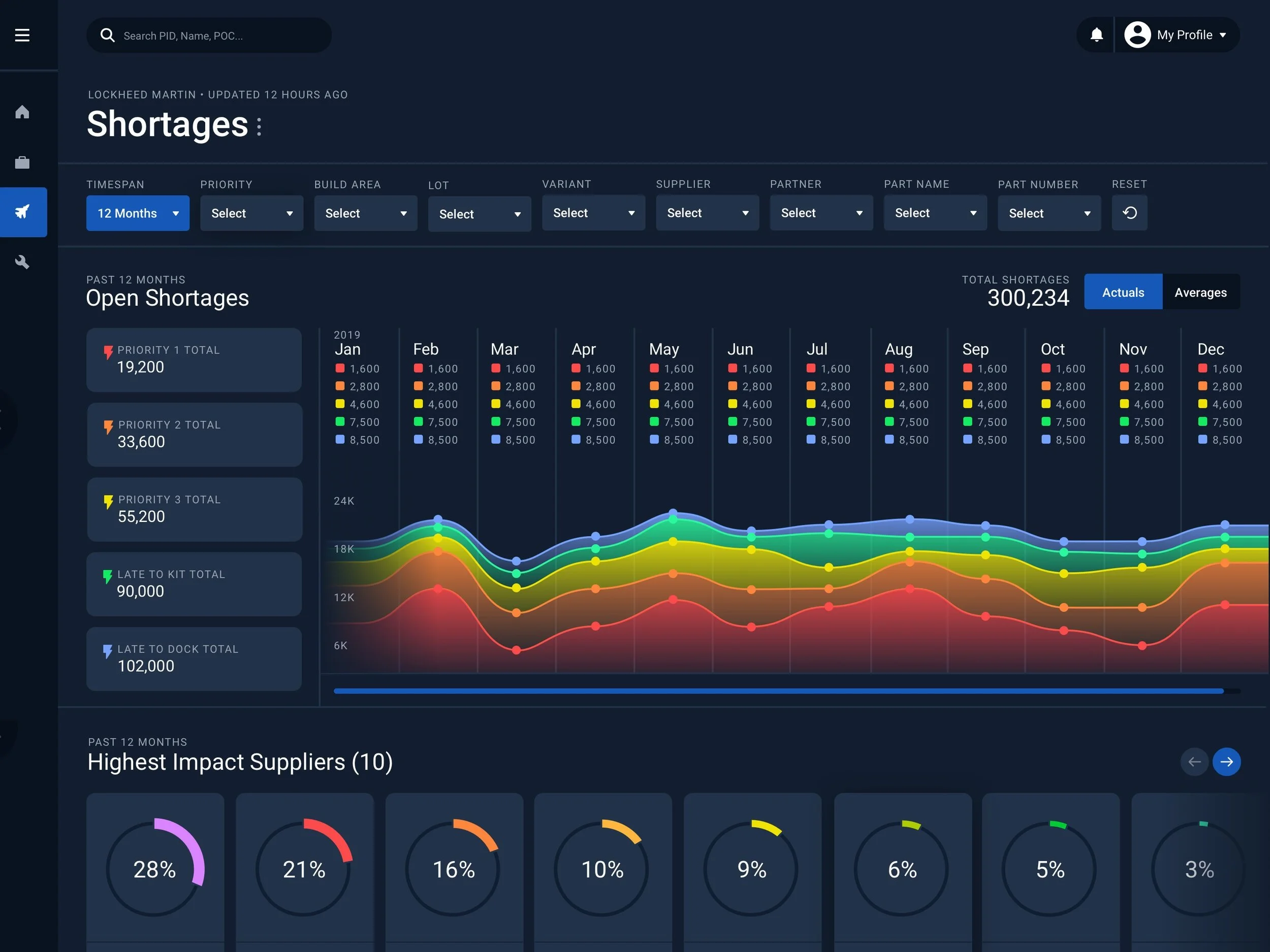
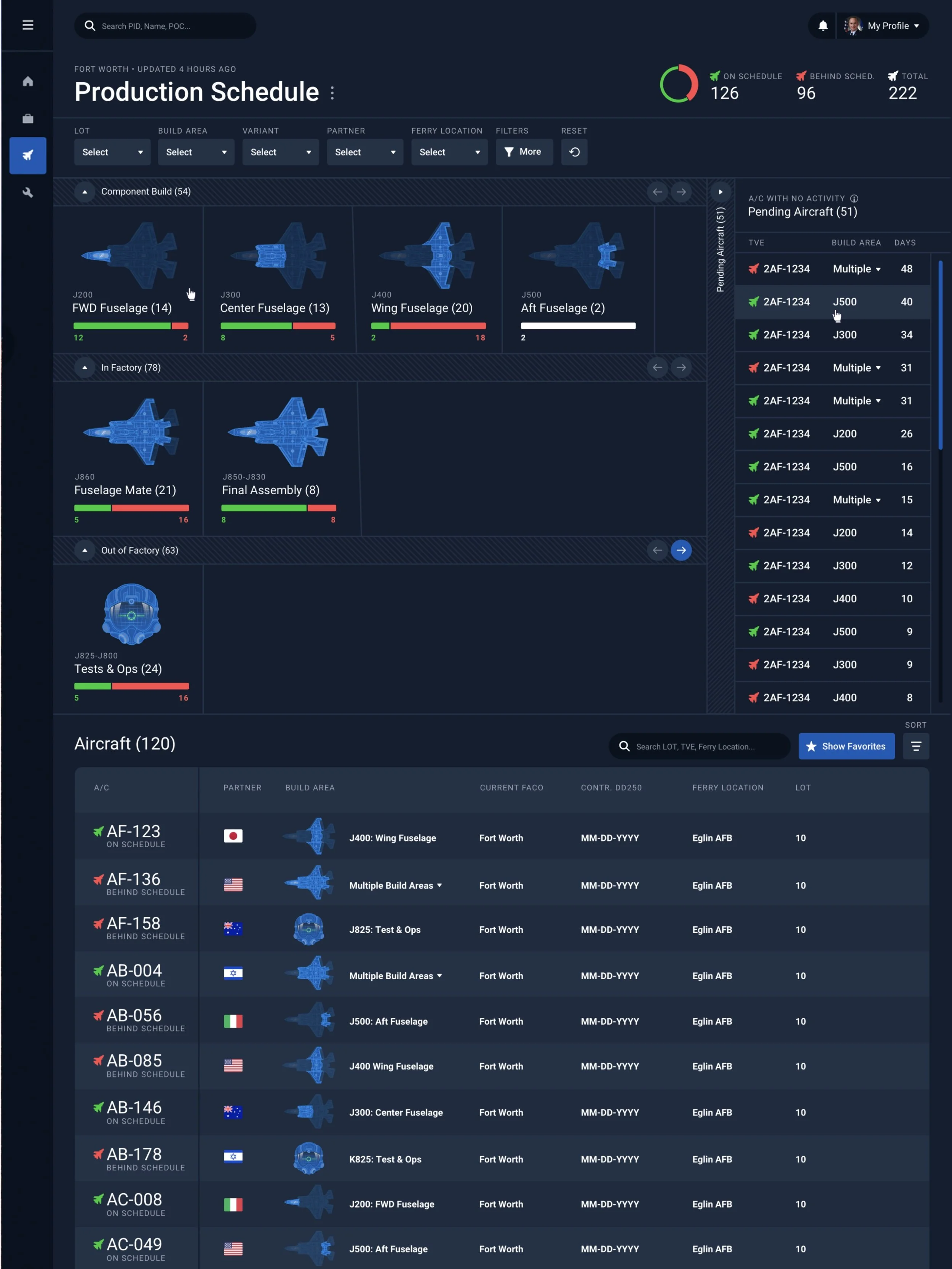
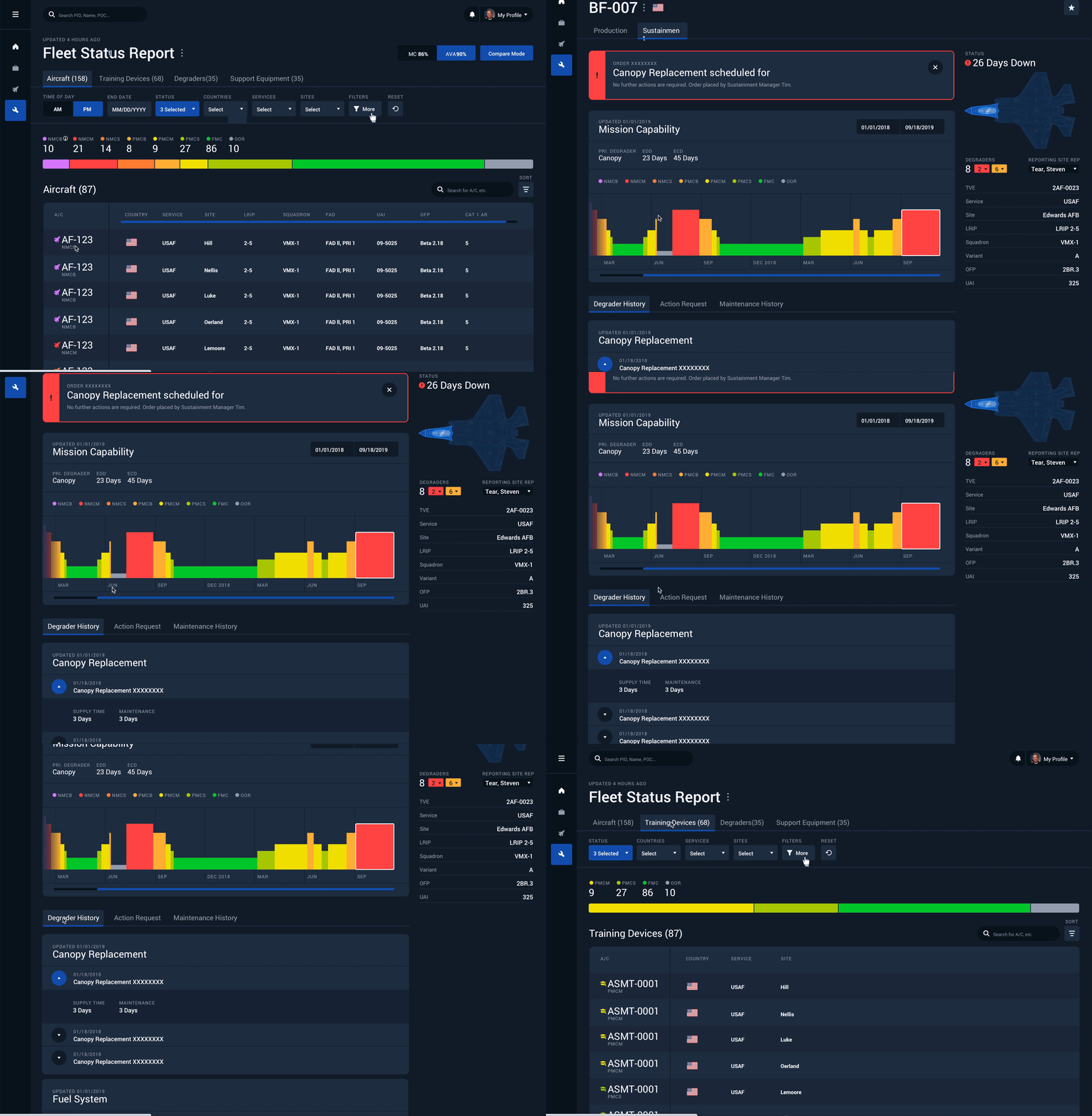
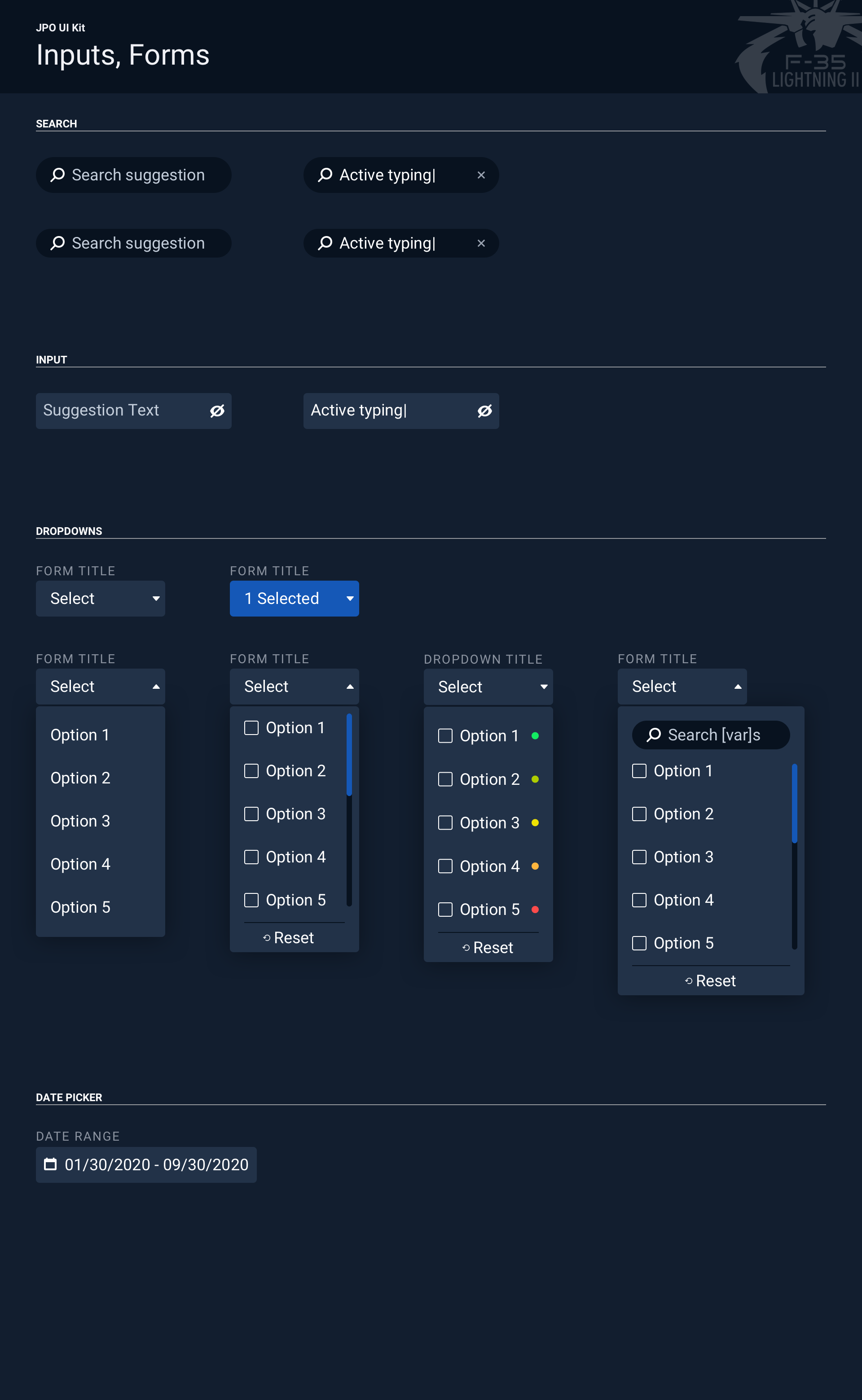
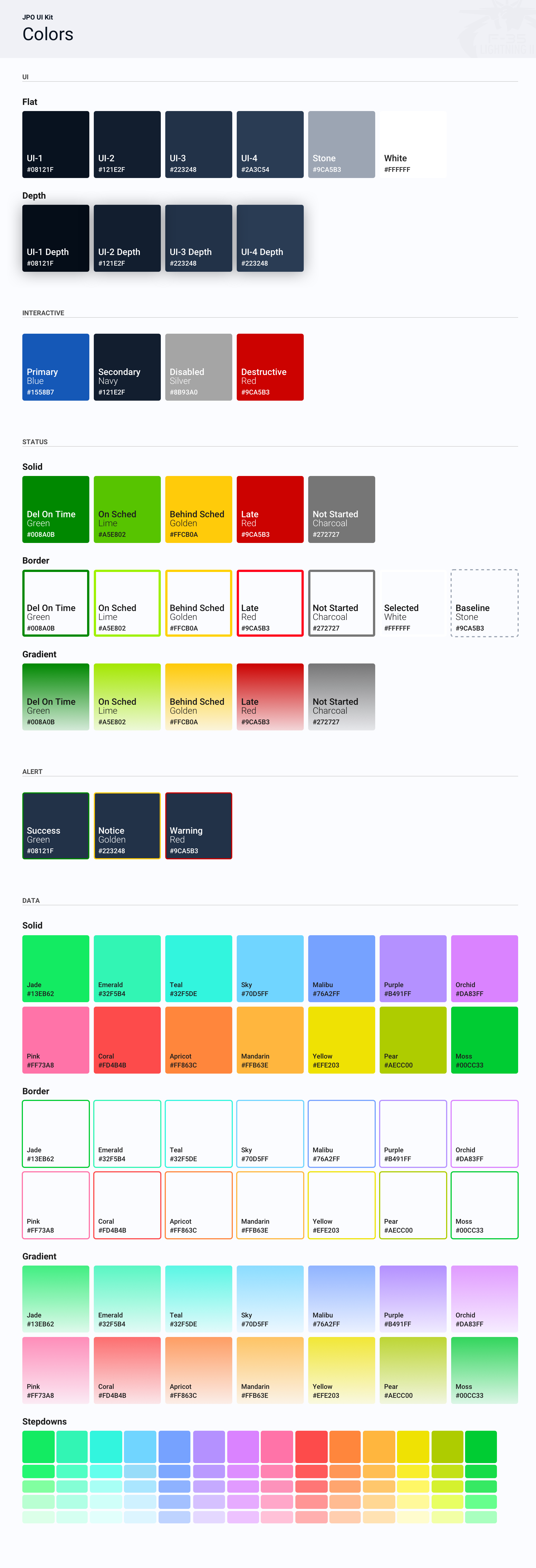
As we continued to build out and validate additional screens and features, we focused our UI design efforts on creating a design system in order to maintain consistent quality across the product. Through cross collaboration with our front end development team, we built a fully comprehensive design system that included components, UI styles, interaction patterns, grids, spacing, language and accessibility standards.